
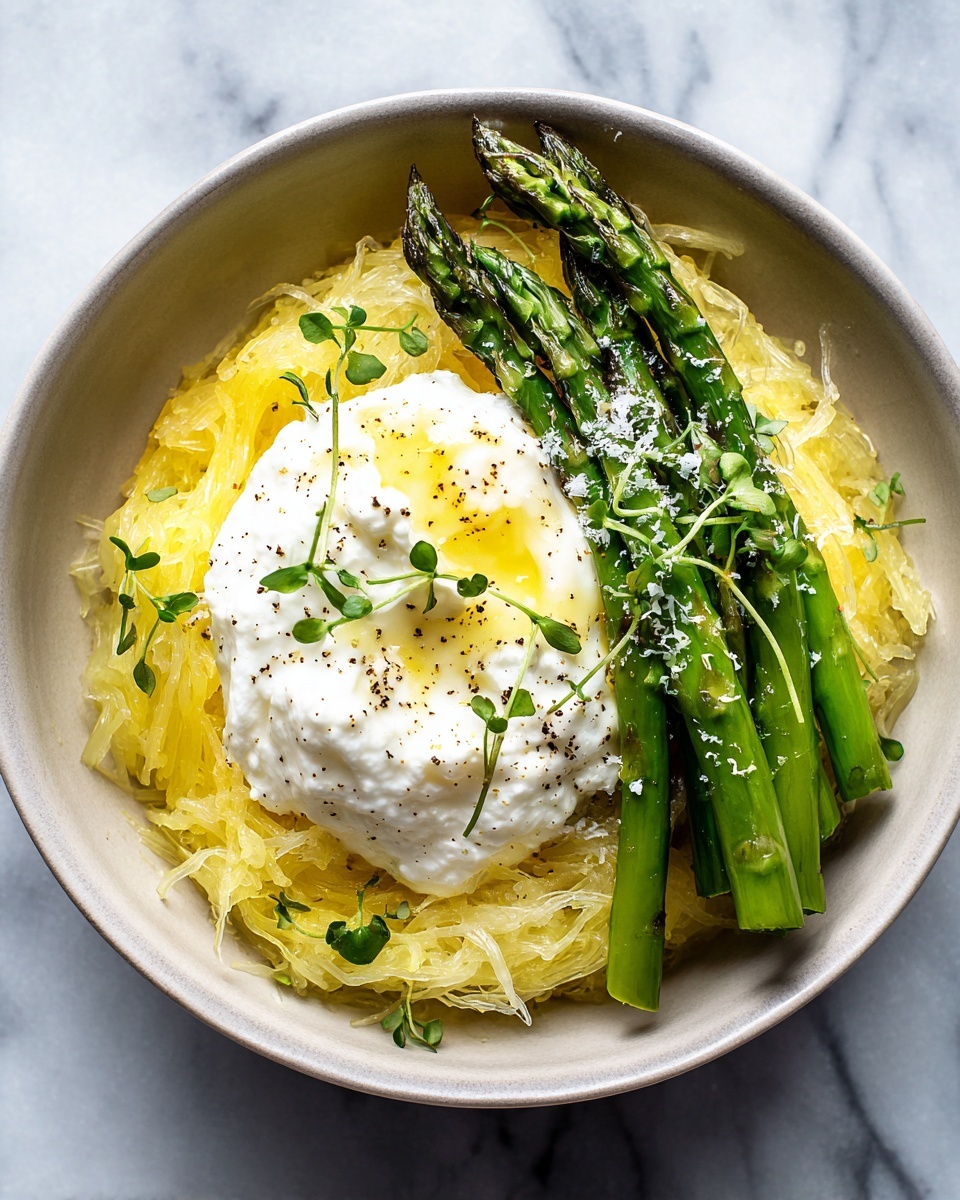
If you’re looking for a vibrant, fresh, and satisfying meal that truly celebrates the colors and flavors of spring, this Spaghetti Squash with Asparagus, Ricotta, Lemon, and Thyme Recipe is an absolute must-try. It brings together the delicate, slightly nutty strands of roasted spaghetti squash with tender asparagus, the creamy brightness of ricotta, and the zesty lift of lemon, all elevated by fragrant fresh thyme. This dish is a beautiful balance of textures and flavors, perfect for a cozy family dinner or an impressive dish to share with friends.
Ingredients You’ll Need
These ingredients are wonderfully simple but each plays an important role in making this dish shine. From the earthy sweetness of spaghetti squash to the fresh tang of lemon and the herbal notes of thyme, every item here works together to create a beautifully balanced plate.
- 1 large spaghetti squash: The star of the dish, it transforms when roasted into tender spaghetti-like strands perfect for soaking up flavors.
- 2 tbsp olive oil: Adds richness and helps roast the squash to golden perfection.
- Salt and pepper, to taste: Essential for seasoning and bringing out the natural flavors.
- 1 bunch asparagus, trimmed and cut into 2-inch pieces: Brings a crisp-tender bite and fresh green color to the dish.
- 1 cup ricotta cheese: Adds creamy texture and mild flavor to balance the asparagus and squash.
- Zest of 1 lemon: Provides bright, aromatic citrus oils for an uplifting note.
- Juice of 1 lemon: Adds fresh acidity to brighten all the flavors.
- 1 tbsp fresh thyme leaves: Infuses the dish with a woody, herbal essence that complements the squash.
- 1/4 cup grated Parmesan cheese: Contributes nutty, salty depth with a savory finish.
- Fresh sage leaves (optional, for garnish): Adds a lovely herbal aroma and elegant presentation.
How to Make Spaghetti Squash with Asparagus, Ricotta, Lemon, and Thyme Recipe
Step 1: Preheat the Oven
Begin by setting your oven to 400°F (200°C). This temperature is perfect for roasting the spaghetti squash so that it becomes tender and easy to shred without drying out its natural sweetness.
Step 2: Prepare and Roast the Spaghetti Squash
Cut the spaghetti squash in half lengthwise and carefully scoop out the seeds. Drizzle the cut sides with olive oil and season generously with salt and pepper. Placing the squash halves cut side down on a baking sheet helps steam the flesh gently, cooking it evenly. Roast for 30-40 minutes until the flesh is tender and can be scraped into spaghetti-like strands with a fork.
Step 3: Cook the Asparagus
While the squash roasts, heat 1 tablespoon of olive oil in a large skillet over medium heat. Add the asparagus pieces and sauté for 5-7 minutes, keeping them crisp yet tender. Season with salt and pepper to bring out their fresh, grassy flavor.
Step 4: Mix the Ricotta
In a bowl, combine the ricotta cheese with the lemon zest, lemon juice, and fresh thyme leaves. Stir until smooth and well combined. This mixture will add a bright creaminess that ties together the roasted vegetables beautifully.
Step 5: Prepare the Spaghetti Squash
Once the squash is roasted and slightly cooled, use a fork to shred the flesh into long, spaghetti-like strands and transfer them to a large bowl. This creates the perfect base for the vegetables and creamy ricotta.
Step 6: Assemble the Dish
Gently toss the sautéed asparagus with the shredded spaghetti squash, combining the fresh and roasted elements. Then add dollops of the lemon-thyme ricotta mixture on top and sprinkle everything with grated Parmesan cheese for an extra layer of savory flavor.
Step 7: Garnish and Serve
Finish by garnishing with fresh sage leaves if you like, which adds an aromatic hint and beautiful presentation. Serve immediately for the best balance of textures and temperature.
How to Serve Spaghetti Squash with Asparagus, Ricotta, Lemon, and Thyme Recipe

Garnishes
Fresh sage leaves or additional thyme sprigs elevate the dish visually and add an herbal fragrance. A light drizzle of high-quality extra virgin olive oil or a sprinkle of crushed red pepper flakes can also add a lovely finishing touch.
Side Dishes
This recipe pairs beautifully with crusty artisan bread or a light green salad dressed with lemon vinaigrette. For a heartier meal, serve alongside grilled chicken or pan-seared fish to complement the fresh, seasonal flavors.
Creative Ways to Present
Try serving the spaghetti squash mixture in individual hollowed-out squash shells for a charming, rustic look. Alternatively, arrange the dish layered in clear bowls or jars for a visually stunning presentation perfect for entertaining guests.
Make Ahead and Storage
Storing Leftovers
Cool leftover Spaghetti Squash with Asparagus, Ricotta, Lemon, and Thyme Recipe completely before storing it in an airtight container in the refrigerator. It will keep well for up to 3 days, allowing you to enjoy this vibrant dish again with minimal effort.
Freezing
While the roasted spaghetti squash and sautéed asparagus freeze well separately, the ricotta mixture does not freeze beautifully due to its texture. For best results, freeze the vegetable components alone and add fresh ricotta and lemon-thyme mixture when reheating.
Reheating
Reheat leftovers gently in a skillet over medium heat or in the oven at a low temperature to maintain texture and flavor. Add fresh ricotta mixture if you stored it separately, and sprinkle Parmesan again before serving.
FAQs
Can I use frozen asparagus instead of fresh?
Fresh asparagus is best for this recipe as it retains a pleasant crunch and vibrant color. However, if you must use frozen, thaw and pat it dry to avoid excess moisture, then sauté gently to prevent mushiness.
Is there a substitute for ricotta cheese?
Yes, mascarpone or cottage cheese can be used as alternatives, though mascarpone offers a richer creaminess while cottage cheese provides a lighter texture. Adjust seasonings accordingly to balance flavors.
How do I choose the right spaghetti squash?
Look for a firm, medium to large squash with a pale yellow rind and no soft spots. Heavier squash tend to have more flesh and be less watery, perfect for shredding into strands.
Can this dish be made vegan?
Absolutely! Substitute ricotta with a plant-based ricotta or tofu blend, and replace Parmesan with nutritional yeast or vegan cheese to maintain the savory notes.
What can I do with leftover spaghetti squash?
Leftover spaghetti squash is versatile and can be added to salads, soups, or baked with marinara sauce and melted cheese for a quick vegetarian meal.
Final Thoughts
This Spaghetti Squash with Asparagus, Ricotta, Lemon, and Thyme Recipe has quickly become one of my favorite ways to celebrate fresh, seasonal produce with minimal fuss but maximum flavor. It’s light yet satisfying, and every bite feels like a burst of springtime happiness. Give it a try soon—you’ll love how simple ingredients come together to create something truly special!
Print
Spaghetti Squash with Asparagus, Ricotta, Lemon, and Thyme Recipe
- Prep Time: 10 minutes
- Cook Time: 40 minutes
- Total Time: 50 minutes
- Yield: 4 servings
- Category: Main Dish
- Method: Roasting
- Cuisine: Italian
- Diet: Vegetarian
Description
A light and flavorful vegetarian dish featuring roasted spaghetti squash tossed with sautéed asparagus, creamy lemon-thyme ricotta, and a sprinkle of Parmesan cheese, perfect for a healthy and satisfying meal.
Ingredients
Spaghetti Squash
- 1 large spaghetti squash
- 2 tbsp olive oil, divided
- Salt and pepper, to taste
Asparagus
- 1 bunch asparagus, trimmed and cut into 2-inch pieces
- 1 tbsp olive oil
- Salt and pepper, to taste
Ricotta Mixture
- 1 cup ricotta cheese
- Zest of 1 lemon
- Juice of 1 lemon
- 1 tbsp fresh thyme leaves
Toppings
- 1/4 cup grated Parmesan cheese
- Fresh sage leaves (optional, for garnish)
Instructions
- Preheat the Oven: Set your oven to 400°F (200°C) to prepare for roasting the spaghetti squash.
- Prepare and Roast the Spaghetti Squash: Cut the spaghetti squash in half lengthwise and scoop out the seeds. Drizzle the cut sides with 1 tablespoon of olive oil and season with salt and pepper. Place the squash halves cut side down on a baking sheet and roast for 30-40 minutes, or until tender and easily shredded with a fork.
- Cook the Asparagus: While the squash is roasting, heat 1 tablespoon of olive oil in a large skillet over medium heat. Add the asparagus pieces and sauté for 5-7 minutes, until tender but still crisp. Season with salt and pepper to taste.
- Mix the Ricotta: In a bowl, combine the ricotta cheese, lemon zest, lemon juice, and fresh thyme. Stir until smooth and well combined.
- Prepare the Spaghetti Squash: Once the squash is roasted, let it cool slightly. Then use a fork to shred the flesh into spaghetti-like strands and transfer them to a large bowl.
- Assemble the Dish: Add the sautéed asparagus to the spaghetti squash and toss gently to combine.
- Top and Serve: Add dollops of the ricotta mixture on top and sprinkle with grated Parmesan cheese. Garnish with fresh sage leaves if desired and serve immediately.
Notes
- Roasting the spaghetti squash brings out its natural sweetness and gives it a tender texture perfect for shredding.
- You can substitute fresh thyme with dried thyme if fresh is unavailable, but use about one-third the amount.
- For a vegan option, substitute ricotta with a plant-based ricotta alternative and skip the Parmesan or use a vegan cheese substitute.
- Make sure not to overcook the asparagus to maintain a pleasant crisp texture.
- Leftovers can be stored in an airtight container in the refrigerator for up to 3 days.