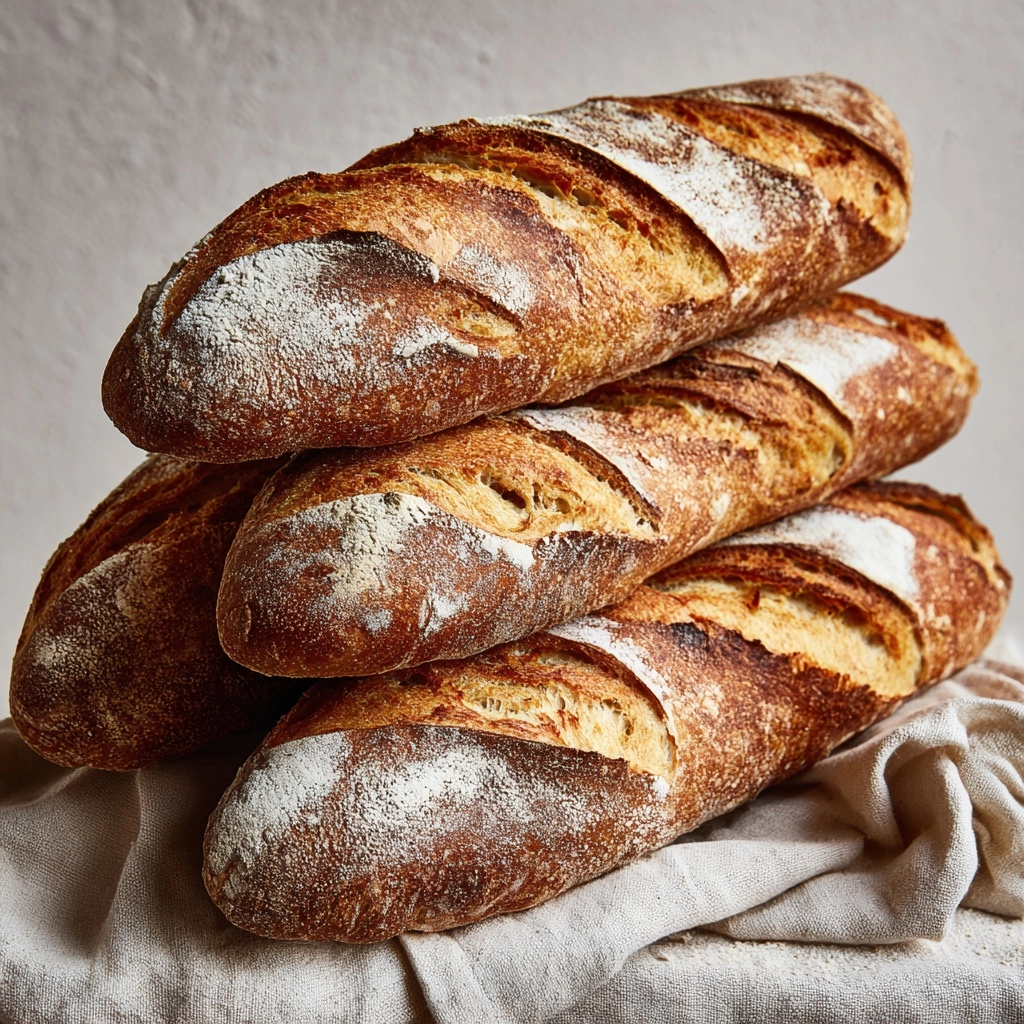
If you have ever dreamed of baking your own bread that boasts a golden, crackling crust with a soft, airy crumb inside, then I am beyond excited to share this Classic Crusty French Baguettes Recipe with you. It perfectly captures the charm of French bakeries right in your kitchen, using simple ingredients that come together to create a loaf that’s both irresistible and deeply satisfying. Whether you’re a seasoned baker or just starting out, these baguettes will fill your home with such a wonderful aroma that your heart will instantly feel at home.
Ingredients You’ll Need
What I love most about this Classic Crusty French Baguettes Recipe is how straightforward the ingredient list is. Every item plays a crucial role in building that perfect texture and that distinctive crust that baguettes are known for.
- Bread flour (3 1/2 cups or 420g): This high-protein flour gives your baguettes their essential chewy texture and structure.
- Salt (1 1/2 teaspoons): Not just for flavor, salt also helps regulate yeast activity and strengthens the dough.
- Sugar (1 teaspoon): A small touch to feed the yeast, jumpstarting the fermentation process.
- Active dry yeast (2 1/4 teaspoons): The magic ingredient that makes your baguettes rise beautifully.
- Warm water (1 1/4 cups or 295ml, at 110°F/43°C): Perfect temperature to activate the yeast without killing it.
- Extra flour for dusting: Keeps your dough from sticking while kneading and shaping.
- Cornmeal for dusting baking sheet: Adds a subtle texture and prevents sticking during baking.
How to Make Classic Crusty French Baguettes Recipe
Step 1: Activate the Yeast
Begin by combining your warm water with the active dry yeast in a large bowl, then let it rest for about 5 to 10 minutes. You want to see it become foamy on top — that’s your sign the yeast is alive and ready to work its magic in your dough.
Step 2: Mix in Sugar, Salt, and Flour
Next, stir in the sugar and salt so they evenly dissolve, then gradually add the bread flour little by little. Keep mixing until a sticky but cohesive dough forms. This is where the transformation is about to begin.
Step 3: Knead Until Smooth and Elastic
Transfer your dough to a floured surface and knead it for 8 to 10 minutes. You’ll want to feel it soften and become smooth, stretchy, and elastic — this indicates your gluten has developed nicely, which is key to that classic baguette texture.
Step 4: First Rise
Place the dough in a lightly greased bowl, cover it with a damp towel, and find a cozy warm spot. Allow it to rise for about an hour, or until it doubles in size. This wait is worth it because the rising helps develop flavor and volume.
Step 5: Shape Your Baguettes
After punching down the dough to release the air, divide it into two equal portions. Shape each carefully into a long baguette about 14 inches long — take your time here and trust the process for that signature slender baguette look.
Step 6: Second Rise on Cornmeal-Dusted Baking Sheet
Place your shaped baguettes onto a baking sheet sprinkled with cornmeal. This prevents sticking and adds a delightful subtle crunch to the crust’s underside. Cover loosely and let them rise again for 30 to 45 minutes; they should puff up beautifully once more.
Step 7: Preheat Oven and Prepare Steam
Preheat your oven to 450°F (230°C), and place a shallow pan of hot water on the bottom rack. The steam it creates during baking helps to develop the baguettes’ iconic crisp crust while keeping the inside soft.
Step 8: Scoring and Baking
Using a sharp knife or bread lame, make 3 to 4 diagonal slashes across the top of each baguette. This step lets steam escape and creates those charming ridges French baguettes are famous for. Bake for 20 to 25 minutes until your bread turns a gorgeous golden brown and sounds hollow when tapped underneath.
Step 9: Cooling Your Baguettes
Once out of the oven, transfer the baguettes to a wire rack to cool completely before slicing. This rest allows the crumb to set and enhances flavor and texture, so patience here is truly a virtue.
How to Serve Classic Crusty French Baguettes Recipe
Garnishes
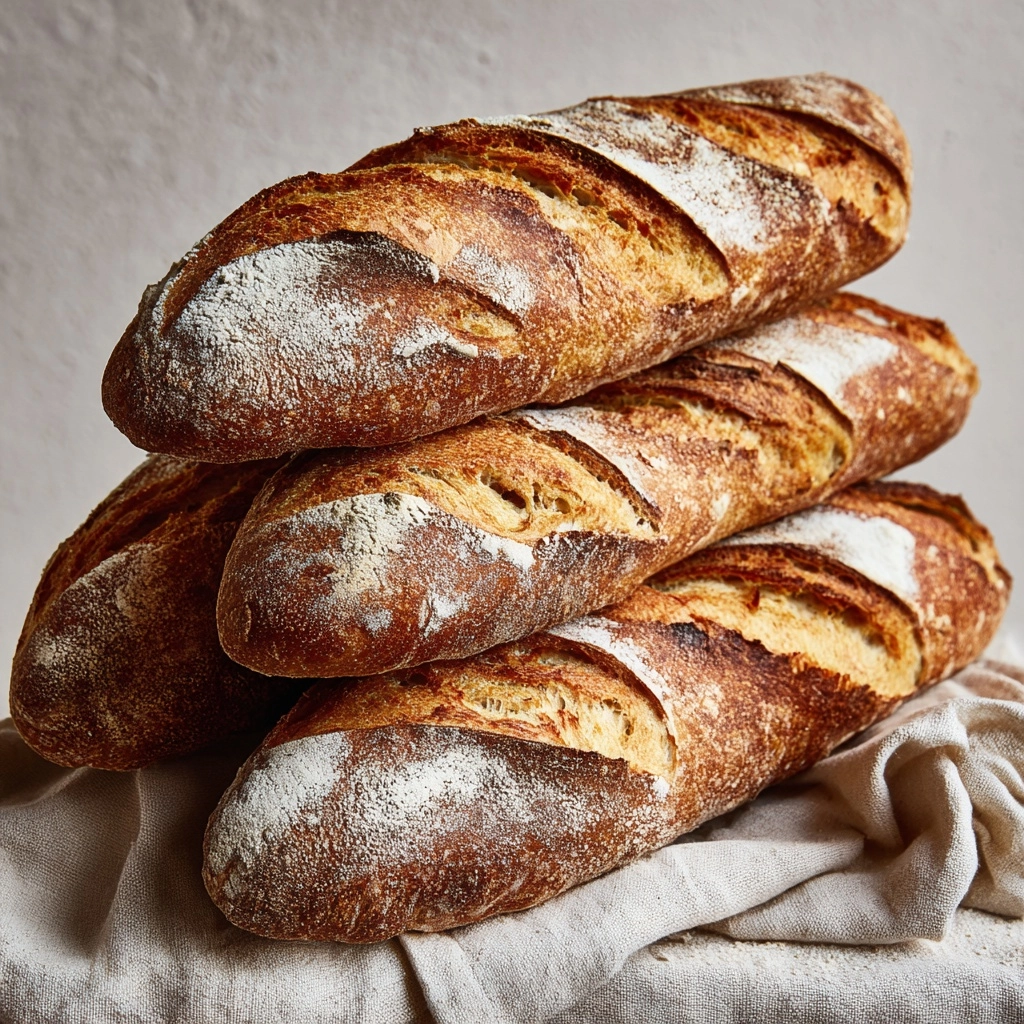
Simple is best when it comes to garnishing your baguettes. A light smear of softened butter or a drizzle of good-quality olive oil elevates the bread’s natural flavors beautifully. For a special touch, sprinkle a little flaky sea salt or fresh herbs like thyme for an aromatic finish.
Side Dishes
Classic baguettes are incredibly versatile and pair wonderfully with a range of dishes. Think rich cheeses, a vibrant ratatouille, or a hearty beef stew. They’re also perfect alongside a bowl of warm soup or fresh salad to soak up those delicious juices.
Creative Ways to Present
Impress your friends by turning sliced baguettes into crostini topped with roasted garlic and fresh tomatoes, or serve slices with a selection of pâté and charcuterie for an elegant appetizer board. Wrapping slices in a light herb butter and toasting them for garlic bread is another irresistible idea.
Make Ahead and Storage
Storing Leftovers
If you have leftovers, store your baguettes in a paper bag at room temperature to keep the crust crisp while preventing them from becoming too hard. Avoid plastic bags as they trap moisture and make the bread soggy.
Freezing
To freeze, wrap your fully cooled baguettes tightly in aluminum foil or plastic wrap, then place them in a freezer bag. Frozen baguettes maintain their quality for up to two months and are perfect when you want fresh-tasting bread on short notice.
Reheating
When ready to enjoy frozen baguettes, reheat them in a 350°F (175°C) oven for about 10 to 15 minutes, wrapped loosely in foil to warm the bread without drying it out. For that extra crunch, unwrap them during the last few minutes of reheating.
FAQs
Can I use all-purpose flour instead of bread flour?
Yes, you can, but bread flour is preferred because its higher protein content helps develop more gluten, resulting in a chewier texture and better structure for your baguettes.
Why is steam important when baking baguettes?
Steam creates a moist environment in the oven, which helps keep the baguette’s surface from setting too quickly. This allows the bread to expand fully and develop that signature crisp and crackly crust.
How do I know when my dough has been kneaded enough?
The dough should be smooth, elastic, and slightly tacky to the touch but not sticky. You can try the “windowpane test” by stretching a small piece until it forms a thin translucent membrane without tearing.
Can I make smaller baguettes or rolls using this recipe?
Absolutely! Just divide the dough into smaller portions and adjust the baking time slightly. Keep an eye on their color and texture to ensure they bake perfectly.
What is the best way to slice baguettes without crushing them?
Use a sharp serrated bread knife and a gentle sawing motion. Let the knife do the work so you maintain the airiness of the crumb without squishing the loaf.
Final Thoughts
There is something truly magical about baking your own Classic Crusty French Baguettes Recipe. It is more than just bread — it’s an experience, a way to bring a slice of French tradition and warmth into your kitchen. Once you taste these baguettes with their perfect crust and tender inside, you’ll wonder why you ever bought them from the store. So grab your ingredients, roll up your sleeves, and get ready for fresh, homemade bread that will always make your meals feel special.
Print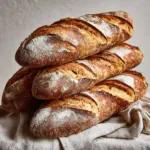
Classic Crusty French Baguettes Recipe
- Prep Time: 1 hour 30 minutes
- Cook Time: 25 minutes
- Total Time: 1 hour 55 minutes
- Yield: 2 baguettes (about 8 servings)
- Category: Bread
- Method: Baking
- Cuisine: French
- Diet: Vegetarian
Description
Classic Crusty French Baguettes are traditional artisanal bread known for their golden, crispy crust and soft, airy interior. Made with simple ingredients and baked with steam for that perfect crust, these baguettes bring authentic French bakery flavors to your kitchen.
Ingredients
Dry Ingredients
- 3 1/2 cups (420g) bread flour
- 1 1/2 teaspoons salt
- 1 teaspoon sugar
- 2 1/4 teaspoons active dry yeast
Wet Ingredients
- 1 1/4 cups (295ml) warm water (110°F/43°C)
For Baking
- Extra flour for dusting
- Cornmeal for dusting baking sheet
Instructions
- Activate Yeast: In a large bowl, combine warm water and yeast. Let sit for 5–10 minutes until the mixture becomes foamy, indicating the yeast is active.
- Make Dough: Stir in sugar and salt, then gradually add the bread flour, mixing until a sticky dough forms.
- Knead Dough: Turn the dough out onto a floured surface and knead for 8–10 minutes until it becomes smooth and elastic.
- First Rise: Place the dough in a lightly greased bowl, cover it with a damp towel, and let it rise in a warm place for about 1 hour or until it doubles in size.
- Shape Baguettes: Punch down the risen dough and divide it into two equal portions. Shape each into a long baguette approximately 14 inches long.
- Second Rise: Place the shaped baguettes on a baking sheet sprinkled with cornmeal. Cover loosely and let rise again for 30–45 minutes.
- Preheat Oven & Add Steam: Preheat your oven to 450°F (230°C) and place a shallow pan of hot water on the bottom rack to generate steam, which helps create a crusty exterior.
- Score Baguettes: Using a sharp knife, make 3–4 diagonal slashes across the top of each baguette to allow expansion during baking.
- Bake: Bake the baguettes for 20–25 minutes or until they turn golden brown and develop a crusty texture.
- Cool: Remove the baguettes and cool them on a wire rack before slicing to let the crumb set properly.
Notes
- For an extra crispy crust, mist the loaves with water just before placing them in the oven and again once during baking.
- Using a baking stone instead of a baking sheet can help achieve a more traditional, artisan texture and crust.